
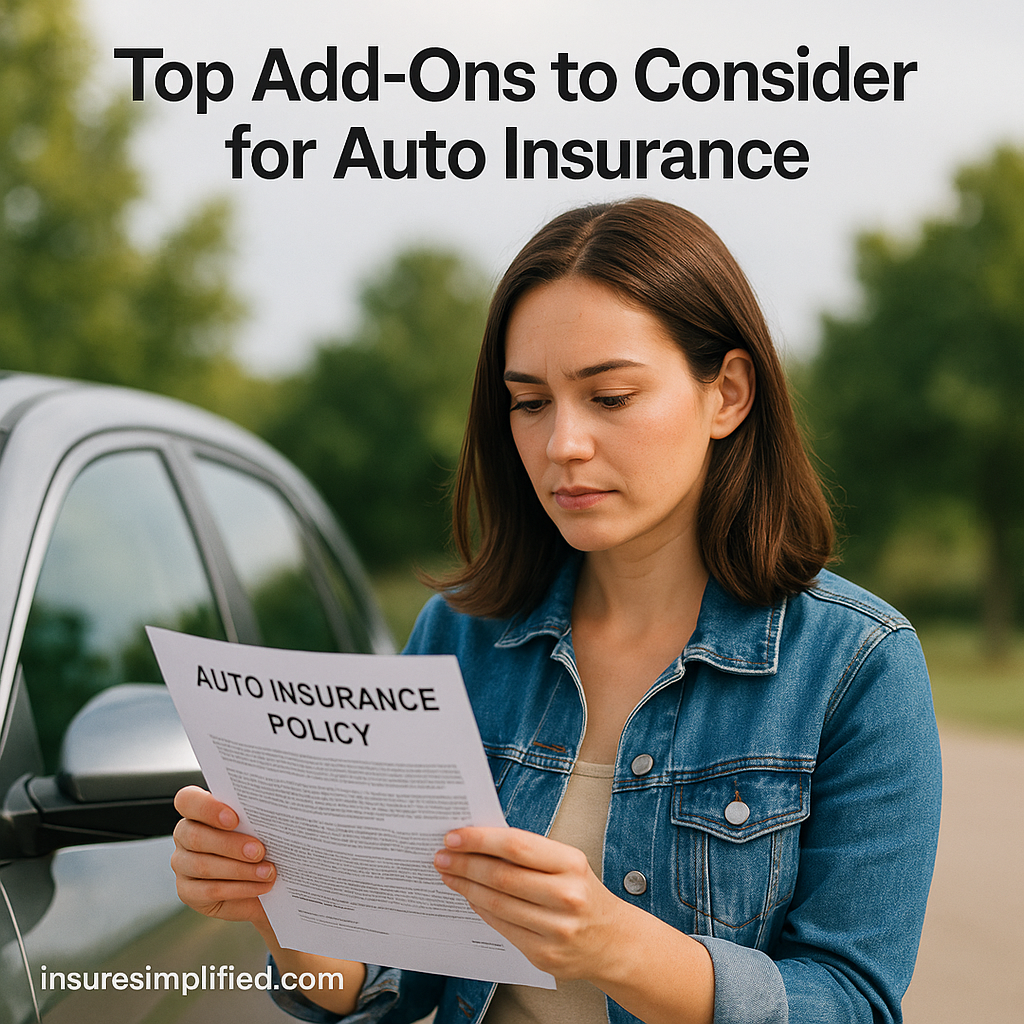
Auto insurance provides essential protection, but a standard policy may not include everything you need. Add-ons—also called endorsements or optional coverages—fill important gaps and give drivers extra peace of mind. Choosing the right add-ons can save you money, reduce stress, and ensure you’re covered for situations that basic policies don’t handle well.
This guide breaks down the top auto insurance add-ons to consider and how each one can enhance your protection.
1. Rental Car Reimbursement
If your vehicle is in the shop after an accident, rental car reimbursement helps cover the cost of a temporary replacement.
Ask your insurer:
- What is the daily and total reimbursement limit?
- Does it apply only to covered accidents?
- Are rideshare services like Uber or Lyft eligible?
This add-on is inexpensive and extremely valuable during repairs.
2. Roadside Assistance
Roadside assistance helps you get back on the road quickly after minor breakdowns.
It typically covers:
- Towing
- Dead battery jump-start
- Flat tire changes
- Fuel delivery
- Lockout assistance
It’s a cost-effective add-on and often cheaper than third-party roadside programs.
3. Gap Insurance
Guaranteed Auto Protection (GAP) covers the difference between your car’s loan or lease balance and its actual cash value if it’s totaled.
Consider this if:
- Your car is new
- You financed most of the purchase
- You leased your car
- Your loan is underwater or close to it
Gap insurance can save you thousands after a total loss.
4. Accident Forgiveness
Accident forgiveness prevents your premium from increasing after your first at-fault accident.
Ask:
- Is it automatically included or added as a paid endorsement?
- Does it apply to all drivers on the policy?
- Are there accident-free requirements?
This add-on protects your long-term premium stability.
5. New Car Replacement
If your new car is totaled, standard insurance pays the depreciated value. New car replacement pays for a brand-new model instead.
Ask:
- What counts as a “new” car (usually <1 or <2 years old)?
- Is full replacement included or limited?
- Are mileage restrictions applied?
This add-on is ideal for brand-new vehicle owners.
6. Custom Equipment Coverage
If you’ve added aftermarket parts—like custom wheels, sound systems, lifts, wraps, or lighting—standard insurance may not cover them.
Ask:
- What types of custom parts are covered?
- What is the coverage limit?
- Does the insurer require receipts or appraisals?
This ensures your upgrades are protected.
7. Uninsured/Underinsured Motorist Property Damage (UMPD/UIMPD)
Not all states include UM/UIM property damage automatically.
Ask:
- Does my policy include property damage coverage for uninsured drivers?
- What are the coverage limits?
- Does it cover hit-and-run incidents?
This add-on protects you from drivers who don’t carry enough insurance.
8. Enhanced Liability Limits
Increasing liability coverage is one of the best value add-ons available.
Ask:
- What higher limits are available?
- How much does increasing liability cost?
- Should I consider an umbrella policy?
Extra liability protection is inexpensive and offers significant financial security.
9. Personal Injury Protection (PIP) Enhancements
In states where PIP is available or required, enhancements can expand your medical and recovery benefits.
These may include:
- Higher medical limits
- Lost-wage protection
- Rehabilitation services
- Essential services coverage
PIP add-ons help support your recovery after an accident.
10. Full Glass Coverage
Glass coverage pays to repair or replace damaged windshields or windows, often with no deductible.
Ask:
- Is full glass included or an optional add-on?
- Does it cover both repairs and replacements?
- Are aftermarket or OEM parts used?
This is valuable for drivers in areas with frequent rock chips or construction debris.
11. Rideshare or Delivery Driver Coverage
If you drive for Uber, Lyft, DoorDash, Instacart, or similar platforms, standard personal auto insurance does not fully protect you.
Ask:
- Is rideshare coverage available?
- Does it cover the period between accepting and completing a ride?
- Is delivery coverage included or separate?
This add-on closes the gap between personal and commercial coverage.
12. OEM Parts Coverage
Original Equipment Manufacturer (OEM) parts coverage ensures your vehicle is repaired with original parts instead of aftermarket alternatives.
Ask:
- Are OEM parts guaranteed for all repairs?
- Are there age or mileage requirements?
- Are luxury or specialty vehicles fully eligible?
OEM repairs can improve safety and maintain vehicle value.
13. Vanishing Deductible
Some insurers reduce your deductible for every year you remain claim-free.
Ask:
- How much does my deductible decrease each year?
- What is the maximum reduction?
- Does the deductible reset after a claim?
This rewards safe driving and lowers your financial burden after an accident.
14. Mexico or International Travel Coverage
If you drive across borders, your U.S. auto insurance may not apply.
Ask:
- Does my insurer offer short-term Mexico insurance?
- Is coverage available for Canada or other countries?
- Are rental cars abroad covered?
International add-ons prevent major liability gaps while traveling.
Final Thoughts
Auto insurance add-ons help tailor your policy to your specific needs, habits, and financial risks. Whether you choose gap insurance for a new car, roadside assistance for peace of mind, enhanced liability limits, or rideshare coverage for gig-work protection, the right add-ons strengthen your safety on the road.
Smart drivers don’t just buy auto insurance—they customize it.