
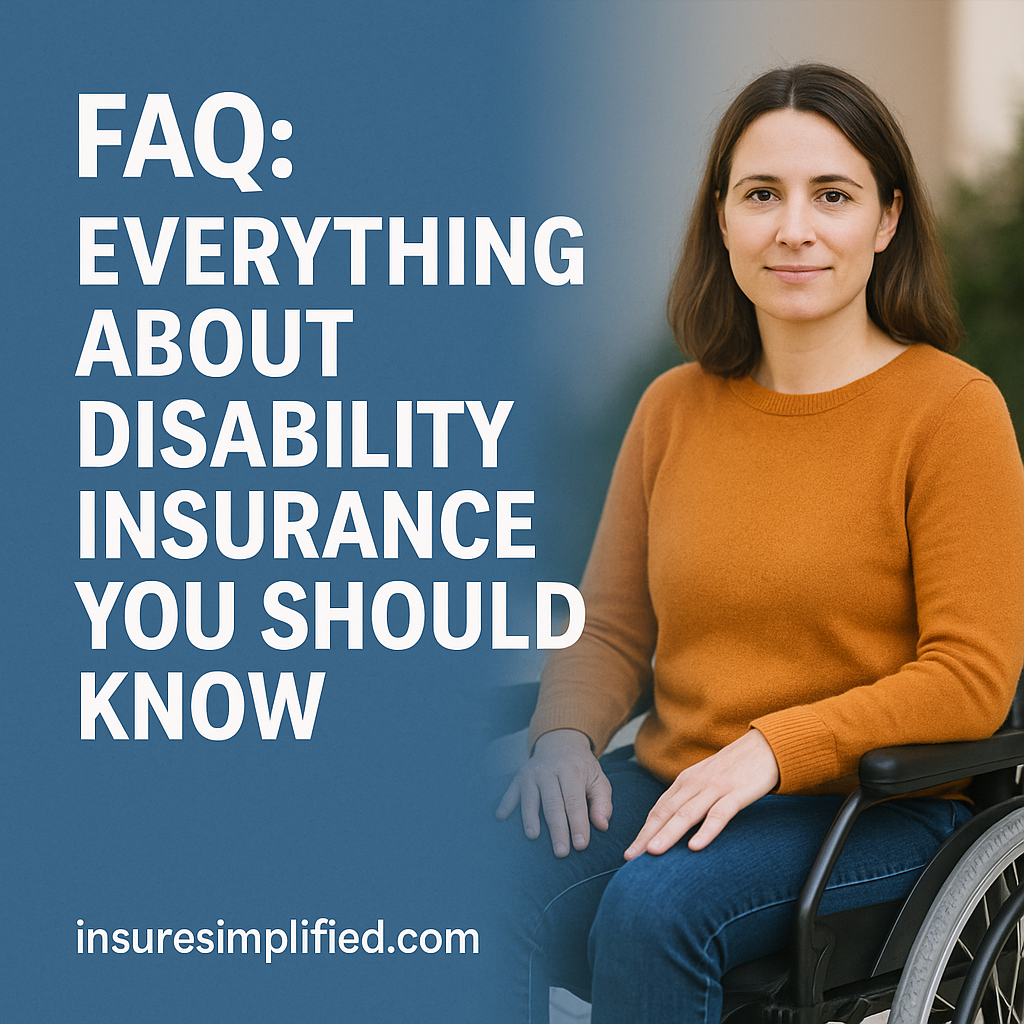
Disability insurance is one of the most overlooked forms of financial protection, yet it can be life-changing when an unexpected illness or injury prevents you from working. This FAQ breaks down everything you need to know so you can confidently choose the right coverage for your income, lifestyle, and long-term security.
What Is Disability Insurance?
Disability insurance provides income replacement if you’re unable to work due to a qualifying illness or injury. It helps pay your living expenses, bills, and essential costs while you recover.
Unlike health insurance—which covers medical bills—disability insurance covers your income, helping you maintain financial stability.
Why Is Disability Insurance Important?
Most people underestimate how vulnerable their income is.
Key reasons disability insurance is essential:
- Lost income can cause long-term financial hardship
- Savings alone may not cover extended recovery periods
- Many disabilities are caused by illness—not accidents
- Injuries or chronic conditions can happen at any age
- It protects your ability to pay rent, mortgage, bills, and essentials
For most working adults, income is their largest asset—disability insurance protects it.
What Types of Disability Insurance Are There?
Short-Term Disability Insurance (STD)
- Provides coverage for short recovery periods (3–6 months)
- Typically replaces 50–70% of your income
- Often offered through employers
Long-Term Disability Insurance (LTD)
- Provides income replacement for years—sometimes until retirement
- Covers serious or long-lasting disabilities
- Replaces about 50–60% of your income
Long-term disability insurance is considered the most critical for lasting protection.
What Conditions Does Disability Insurance Cover?
Coverage varies, but common qualifying disabilities include:
- Injuries from accidents
- Back or joint disorders
- Cancer
- Heart conditions
- Stroke recovery
- Severe mental health conditions
- Autoimmune disorders
- Pregnancy complications (short-term disability)
Many disabilities are caused by illness rather than accidents, making broad coverage essential.
What Conditions Are Not Covered?
Generally excluded:
- Self-inflicted injuries
- Disabilities caused by illegal activity
- Disabilities occurring before the waiting period
- Certain pre-existing conditions (depending on the policy)
- Cosmetic procedures
Always review your policy for specific limitations.
How Much Disability Coverage Do You Need?
Experts recommend replacing at least 60% of your income.
Consider:
- Monthly bills and financial obligations
- Whether others rely on your income
- Emergency savings
- Your job’s physical demands
- Your employer-sponsored benefits
A financial advisor can help estimate your exact coverage needs.
How Long Does Disability Insurance Pay Benefits?
Benefit periods vary:
- 3 months
- 6 months
- 1 year
- 5 years
- Until age 65 or retirement (long-term disability)
The longer the benefit period, the higher the premium—but the better the protection.
What Is the Elimination Period?
The elimination period is the waiting period between when your disability occurs and when benefits begin.
Common options:
- Short-term: 0–14 days
- Long-term: 30, 60, 90, 180 days
Longer elimination periods reduce premiums.
How Much Does Disability Insurance Cost?
Costs depend on:
- Age
- Health
- Occupation risk level
- Income
- Benefit amount
- Benefit duration
- Elimination period
Average: 1–3% of your annual income.
Higher-risk jobs (construction, physical labor) have higher premiums.
What’s the Difference Between Own-Occupation and Any-Occupation Coverage?
Own-Occupation
Considered disabled if you cannot perform the duties of your specific job, even if you can perform another job.
Most comprehensive protection—higher premium.
Any-Occupation
You must be unable to perform any job for which you are reasonably qualified.
More restrictive—lower premium.
Own-occupation is highly recommended for professionals with specialized skills.
Does Disability Insurance Cover Mental Health?
Many policies cover disabilities caused by:
- Depression
- Anxiety disorders
- PTSD
- Bipolar disorder
- Other mental health conditions
However, benefits may be capped at 12–24 months. Check policy details.
Can You Have Multiple Disability Policies?
Yes. Many people combine:
- Employer disability insurance
- Individual long-term disability policies
- Supplemental disability coverage
This allows you to replace a higher percentage of income.
Does Workers’ Compensation Replace Disability Insurance?
Workers’ comp covers injuries or illnesses that occur at work, but:
- Most disabilities happen outside the workplace
- Workers’ comp benefits can be limited
- Not all workers qualify
Disability insurance provides much broader protection.
Does Disability Insurance Cover Self-Employed Individuals?
Absolutely. Self-employed workers often benefit the most because:
- They rely entirely on their own income
- They don’t have employer disability benefits
- Income loss can halt the entire business
Policies can be personalized based on fluctuating income.
How Do You File a Disability Insurance Claim?
- Notify your insurance provider
- Submit medical documentation
- Provide employment and income records
- Undergo evaluation by the insurer
- Receive approval or request for more information
Keep detailed records to speed up the process.
How Can You Lower Disability Insurance Costs?
You can reduce premiums by:
- Choosing a longer elimination period
- Selecting a shorter benefit period
- Reducing monthly benefits
- Maintaining strong health habits
- Getting coverage at a younger age
- Avoiding risky hobbies
Comparing policies from multiple insurers also helps.
Final Thoughts
Disability insurance is one of the most powerful financial safety tools available. It protects your income, your independence, and your long-term financial future in the event of an unexpected illness or injury. Use this FAQ as your guide to understand your options and choose the right coverage for your needs.