
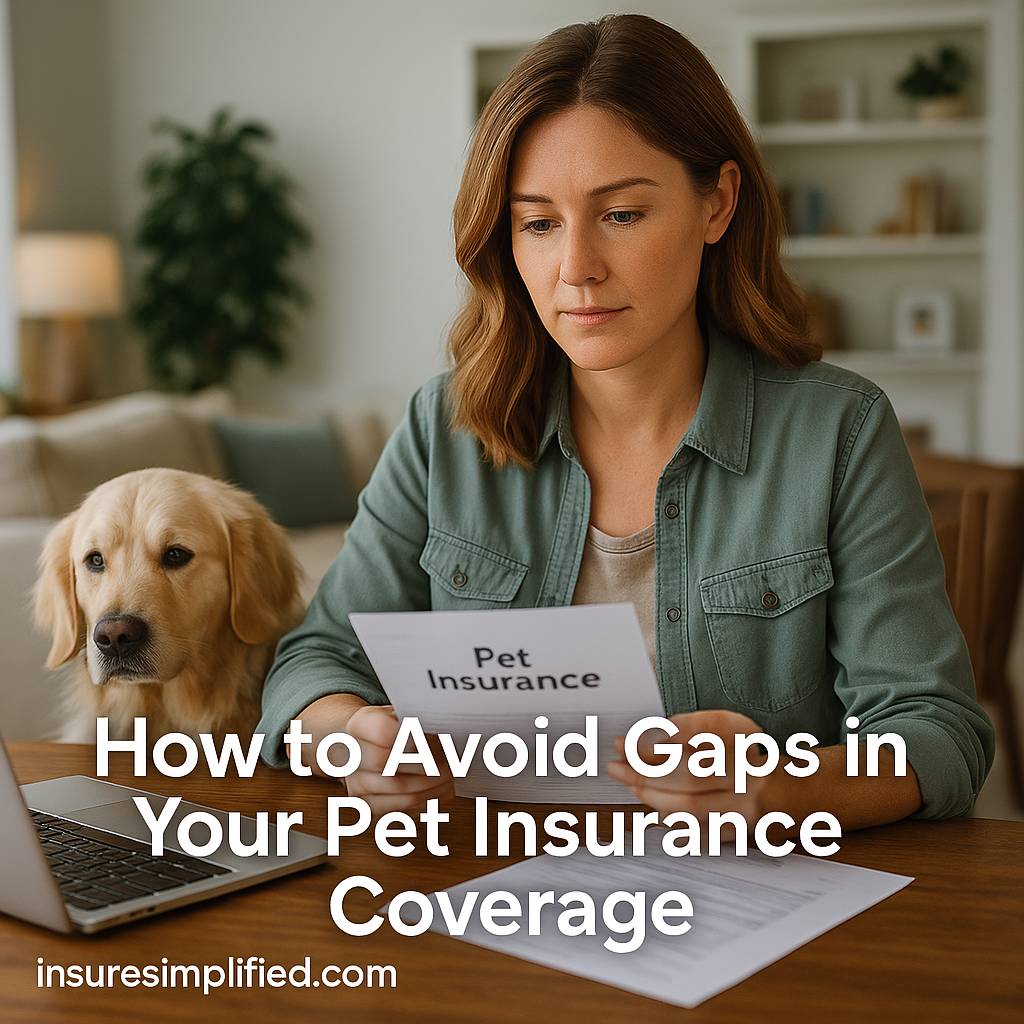
Pet insurance helps protect you from the financial shock of unexpected vet bills — but only if your coverage is complete. Many pet owners assume they have full protection until a claim is denied because of a pre-existing condition, missing rider, treatment exclusion, or lapse in coverage. These gaps often stay hidden until the moment you need the policy most.
The good news? Most pet insurance coverage gaps are completely preventable. With a bit of planning and an understanding of how pet insurance works, you can protect your pet and avoid expensive surprises.
This guide breaks down the most common coverage gaps and shows you how to prevent them, so your pet stays protected throughout their life.
Why Pet Insurance Coverage Gaps Happen
Unlike human health insurance, pet insurance doesn’t follow standard federal rules. Each company sets its own:
- Waiting periods
- Exclusions
- Coverage limits
- Reimbursement rules
- Policy renewal conditions
- Age requirements
- Pre-existing condition definitions
- Breed-specific exceptions
Because of these variations, coverage gaps happen easily when owners don’t fully understand what their policy includes.
Common Gaps in Pet Insurance Coverage
Below are the most frequent mistakes and misunderstandings that leave pets unprotected.
1. Pre-Existing Conditions Not Covered
Pet insurance companies never cover pre-existing conditions.
Examples include:
- Allergies
- Skin issues
- Ear infections
- Arthritis
- GI disorders
- Heart conditions
If your pet develops a condition before you enroll, it will likely be excluded for life.
This is why enrolling early — ideally as a puppy or kitten — is one of the most important ways to avoid coverage gaps.
2. Waiting Periods Before Coverage Starts
All pet insurers impose waiting periods for:
- Accidents (typically 1–3 days)
- Illnesses (10–14 days)
- Orthopedic conditions (often 6 months unless waived)
If your pet gets hurt or sick during the waiting period, that issue becomes a pre-existing condition.
3. Not Understanding Annual Limits, Per-Condition Limits, or Lifetime Limits
Policies include different types of limits, such as:
- Annual limits ($5,000–unlimited)
- Per-condition limits (caps payouts for each illness)
- Lifetime limits (overall maximum benefit)
Choosing a limit that’s too low can result in coverage running out mid-treatment.
4. Missing Coverage for Chronic or Hereditary Conditions
Not all insurers cover hereditary or congenital issues — especially in high-risk breeds.
Examples:
- Hip dysplasia
- IVDD
- Heart disease
- Eye disorders
- Patellar luxation
Without the right plan or rider, these conditions may be excluded.
5. Not Having Dental or Wellness Coverage (If Needed)
Standard accident-and-illness policies rarely include:
- Dental cleanings
- Tooth extractions
- Vaccines
- Microchipping
- Flea/tick/heartworm prevention
If these services matter to you, you must add a wellness or dental rider.
6. Coverage Lapses Due to Missed Payments
A missed payment can cause the policy to:
- Cancel
- Require a full re-application
- Reclassify old conditions as pre-existing
- Deny pending reimbursements
Even one lapse can permanently impact coverage.
7. Not Updating the Policy as Your Pet Ages
Senior pets have higher health needs and may require:
- Lower deductibles
- Higher reimbursement
- Higher annual limits
- Additional riders
Pets’ needs change — your policy should too.
8. Not Tracking Breed-Specific Risks
Some breeds are prone to conditions not covered without proper endorsements.
Examples:
- Bulldogs → respiratory issues
- Dachshunds → IVDD
- German Shepherds → hip dysplasia
- Persian cats → heart issues
If your policy excludes these risks, your pet may have major coverage gaps.
9. Assuming All Procedures Are Covered
Common exclusions include:
- Elective procedures
- Cosmetic surgeries
- Breeding/pregnancy care
- Behavioral therapy (unless covered by rider)
- Prescription food
- Boarding or daycare
Always check your policy details or ask your insurer directly.
How to Avoid Gaps in Your Pet Insurance Coverage
Use these strategies to maintain consistent and complete pet coverage.
1. Enroll Early — Ideally When Your Pet Is Young
You’ll avoid:
- Pre-existing condition exclusions
- Higher premiums
- Reduced coverage options
The earlier you enroll, the better the lifetime protection.
2. Choose the Right Coverage Type (Accident-Only vs. Accident & Illness)
Accident-only is cheaper, but extremely limited.
Accident & Illness provides the comprehensive protection most pets need.
3. Understand and Plan Around Waiting Periods
Schedule:
- Vet appointments
- Activities
- Travel
…after you know coverage is active.
4. Select the Right Annual Limit
For strong protection:
- $10,000–$20,000 annual limit is recommended
- Choose unlimited if your pet is high-risk
High-cost conditions like cancer or surgery can quickly exceed low limits.
5. Adjust Your Deductible and Reimbursement Strategically
Young pets → higher deductible = lower premium
Older pets → lower deductible = better coverage
Match reimbursement to expected health needs:
- 70% for low-risk
- 80–90% for higher-risk pets
6. Add Wellness or Dental Riders If Needed
If your pet needs:
- Dental care
- Routine vaccines
- Preventive services
…a wellness rider may reduce long-term costs.
7. Keep Payments on Auto-Pay
To avoid accidental lapses, set up:
- Auto-payment
- Backup payment method
- Renewal reminders
This ensures continuous protection.
8. Update the Policy When Your Pet’s Health Changes
If your pet develops new conditions:
- Review your deductible
- Adjust reimbursement
- Increase annual limits if needed
Make updates before renewal to avoid gaps in next year’s coverage.
9. Review Your Policy Annually
Each year, check:
- Limits
- Deductible
- Covered conditions
- Exclusions
- Breed-specific risks
- Medication requirements
Policies change — make sure yours still fits your pet.
Final Thoughts
Pet insurance is an incredible tool for protecting your pet’s health and your finances — but only if your coverage is complete. By enrolling early, understanding exclusions, updating your policy as your pet ages, and reviewing your plan regularly, you can avoid coverage gaps and ensure your pet is fully protected throughout their life.
This guide gives you the knowledge to close coverage gaps and build a long-term insurance strategy that truly supports your pet’s well-being.